
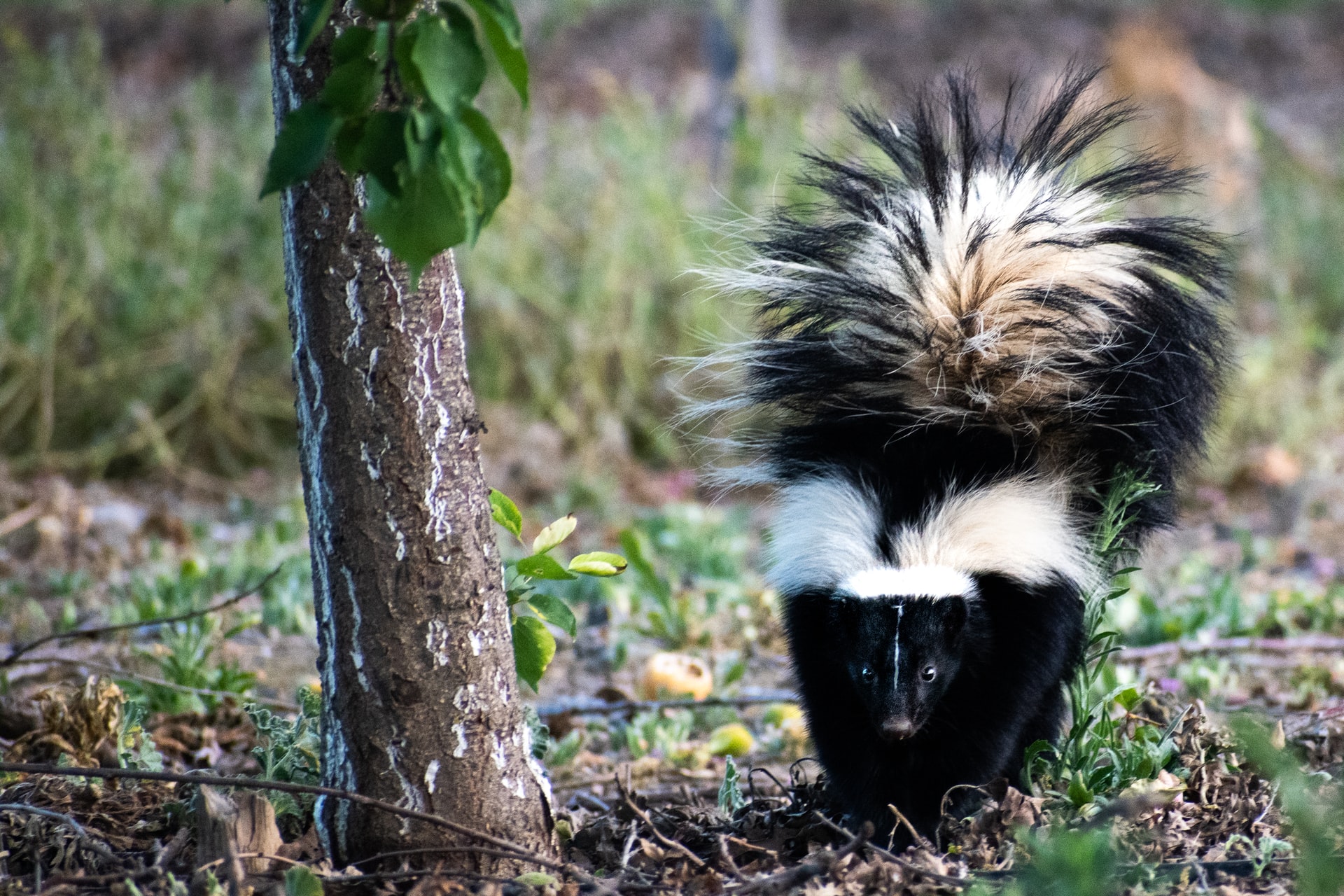
Ontario skunk removal experts
Skunk removal in Ontario, done humanely:
- Skunk removal from burrows under decks, sheds, porches, and foundations
- Humane den exclusion using one-way valves at the burrow entrance
- Skunk family timing — kits stay with their mother
- Den cleanup and structural sealing after the family has left
- Yard digging / grub-damage prevention
Skunks cannot climb. Unlike raccoons or squirrels, skunks are ground-dwellers that live in burrows and under low structures. Anyone who tells you otherwise has the wrong animal.
Why choose The Critter Guy for skunk removal?
We focus on getting the job done without overcomplicating it: fair pricing, honest work, and workmanship we stand behind.
- Family-owned small business — Dave and Roman on every job
- 18+ years of skunk removal experience in Ontario
- Spray-free protocols — we know how to exclude without triggering a defensive spray
About Ontario skunks
The striped skunk (Mephitis mephitis) is what you’ll see almost everywhere in southern Ontario. They’re omnivores — they eat insects, grubs, small rodents, fruit, garbage, and pet food left outside. In an urban or rural-residential setting, lawn grubs are one of the biggest attractants (the skunk-flipped-sod look in spring is almost always a grub hunt).
The skunk breeding cycle:
- Skunks mate in February and March.
- Pregnancies last about 63 days.
- Most kits are born late April through early June.
- A typical litter is 2–10 kits (4–6 is most common).
- Kits stay with the mother in the den for about 6–8 weeks before they start travelling with her.
If you see a skunk during the day in late spring or summer, it doesn’t necessarily mean rabies — mothers with kits will sometimes forage in daylight because the kits drain a lot of calories.
Skunk health concerns
- Rabies: skunks are a primary rabies vector in Ontario. A skunk acting strangely (disoriented, unprovoked aggression, paralysis) should be reported and avoided.
- Roundworm: skunks can carry Baylisascaris columnaris (a relative of the raccoon roundworm). Don’t handle skunk feces without gloves.
- Ticks, fleas, and lice: common parasites carried by wild skunks.
- Distemper: can be passed to unvaccinated dogs and cats.
Most homeowners’ first concern is the spray, not the disease. Skunks only spray as a last resort — but if you corner one, or if a dog approaches one, expect spray. We use specific approach protocols to avoid triggering it.
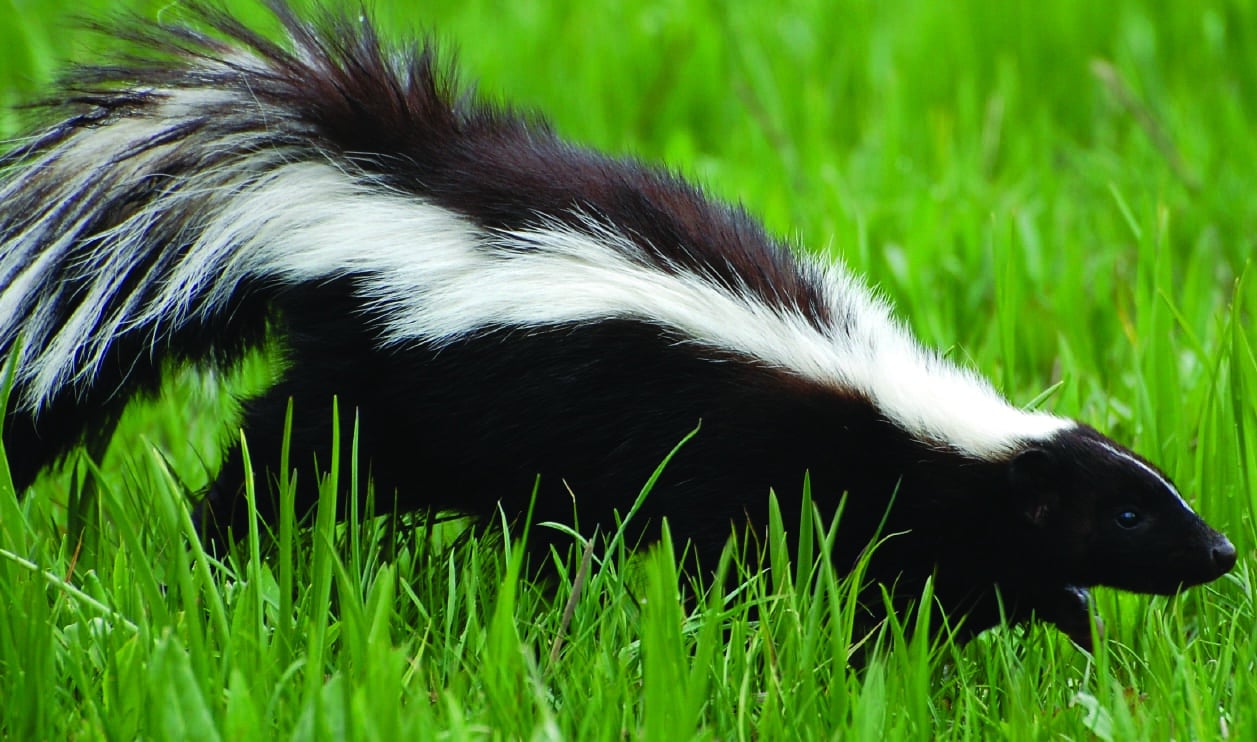
How to prevent skunks from denning under your home
Skunks den at ground level under decks, sheds, porches, low foundations, and woodpiles. Prevention is mostly about closing those den spaces before a skunk finds one:
- Seal under-deck and under-shed gaps. Skunks need only a 4-inch gap to fit underneath. Heavy-gauge wire mesh, buried 8–12 inches below grade with the bottom flared outward, prevents them from digging back in.
- Confirm the den is empty before sealing. If kits are inside and you seal the entry, the mother either digs her way back through (causing more damage) or the kits starve in the burrow. We always confirm before we seal.
- Address the grub problem. If skunks are tearing up your lawn at night, they’re after grubs. Beneficial nematodes or a targeted insecticide treatment removes the food source.
- Secure your garbage and pet food. Locking lids and bringing pet food in at night both help.
- Cover open foundation vents and crawl-space gaps with heavy-gauge, rust-proof mesh — including bathroom and dryer vents at ground level.
Skunks in the yard?
If you’re seeing skunks in the yard but not under any structures, the issue is usually food access: grubs, garbage, pet food, fallen fruit, or compost. Address the food source and the skunks usually move on within a week or two. If they’ve already dug a den under a shed or deck, the exclusion fix comes first.
Skunks in the garbage?
Unsecured garbage is an easy meal. Use a heavy lid with a locking strap, and bring cans into the garage overnight where possible. If a skunk has set up a regular route to your bins, it may also be denning nearby.
Skunks under the deck?
This is the most common skunk job we run. Decks, sheds, and porches all create the dark, dry, protected den space skunks look for. In spring, an under-deck den is often a maternity site — and mothers will defend their kits. The way we run an under-deck exclusion:
- Confirm whether kits are present (timing changes if they are).
- Identify the active entry hole and any backup exits.
- Install a one-way valve at the active entry, so the family can leave at night but can’t return.
- Once the burrow is confirmed empty, dig a trench, install heavy-gauge mesh buried 8–12 inches deep with the bottom flared outward, and backfill.
- Seal any secondary access points around the deck or shed.
We do not use spray-triggering trapping methods unless the situation specifically calls for it (rare).
How we remove your skunk problem
1. Inspect for entry points and signs
The first job is finding the den. We look for the dug burrow at the deck or shed perimeter, paw prints, tufts of fur on the entry edge, the characteristic musky smell (which is not the same as a spray — denning skunks have a base scent), and lawn damage. We identify the primary entry and any backup exits.
2. Check for kits
Skunk kits are typically in the den from late April through early July. If kits are present, exclusion timing changes — we wait for them to be mobile (about 6–8 weeks old) or we do a hands-on family relocation. We don’t seal a mother out while her kits are still nursing in the burrow.
3. Humane den exclusion
Removal is almost always one-way valve at the burrow entrance:
- The valve lets skunks leave at night but blocks re-entry.
- After 5–10 nights with no activity, we confirm the burrow is empty.
- We remove the valve and seal the dig with heavy-gauge mesh buried below grade.
In rare cases we use hands-on trapping. We always use size-appropriate traps and approach calmly to avoid triggering spray.
4. Clean up and seal
Once the family has left, we backfill the burrow with mesh and earth, seal under-deck and under-shed gaps with heavy-gauge wire (buried below grade), and fix any structural damage. Big jobs sometimes include lawn restoration after grub-related digging.
Signs you have a skunk
- A musky base scent around a deck, shed, porch, or foundation (this is the denning smell, not a spray)
- Dug holes 3–4 inches wide at the perimeter of a structure
- Cone-shaped holes in the lawn at night (grub feeding)
- Skunk tracks in soft soil or snow — five toes, claws visible
- Knocked-over garbage cans
- Direct sightings at dusk or dawn
Ontario skunk removal — service area
London · Bayfield · Kitchener · Goderich · Kincardine · Grand Bend · Listowel · Sauble Beach · Wasaga Beach · Owen Sound · Collingwood · Walkerton · Wiarton · Meaford · Southampton · Port Elgin · Markdale · Hanover
Ready for an inspection?
Request a skunk quote or call 519-783-1575. Family-owned, with workmanship we stand behind.
Kind words from skunk-removal customers
“We had some skunks and raccoons shack up on our property around our deck and garage. The Critter Guys were impeccable — Roman and Dave got all the hard work done, and even found some raccoon babies. I’m glad I found them, because I would not want to do all the roof work and all the digging around the property.” — Chris Johnson