
Ontario bat removal experts
We do humane bat work across Grey, Bruce, Huron, and Simcoe Counties. Every job follows the same pattern: inspection, one-way exclusion, and structural sealing.
Our bat services
- Bat removal from attics, chimneys, and wall cavities
- Bat-proofing the structure (sealing every secondary entry point)
- One-way exclusion devices installed at active entry points
- Attic decontamination and clean-up after the colony has left
- Bat colony removal, scheduled around seasonal timing
Why choose The Critter Guy for bat removal?
We focus on getting the job done without overcomplicating it. Fair pricing, honest work, and workmanship we stand behind.
- Family-owned small business — same crew every time
- 18+ years of bat removal experience across Ontario
- Humane exclusion only — no traps, no bait, no poison
Seasonal timing matters
Bat work follows seasonal timing. We inspect any time of year, and we schedule the actual exclusion work for the right season to make sure the colony — adults and pups — exits together.
If you have an emergency situation (a bat inside the living space, a bite scare), we handle that immediately — that’s separate from colony exclusion.
Bats in Ontario — the species you’ll most likely see
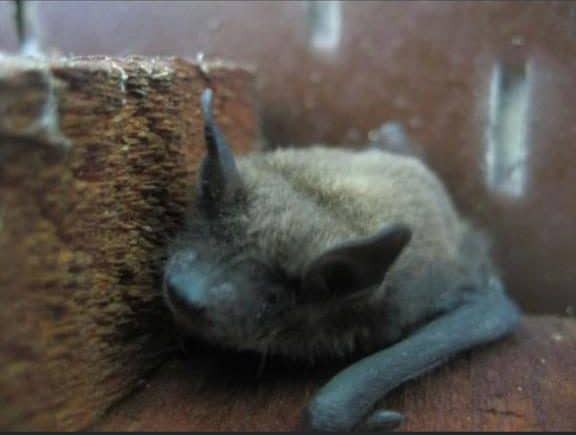
There are several species of bats in Ontario. The most common is the little brown bat (Myotis lucifugus), a small member of the vesper bat family that roosts in trees and buildings, in both rural and urban areas. Other species include the big brown bat, the hoary bat, and the silver-haired bat — these larger species are more common in forested areas and tend to roost in caves or under tree bark.
Several Ontario bat species have been hit hard by white-nose syndrome and are at risk; this is part of why exclusion (rather than killing) is the right approach.
How to prevent bats from nesting in your home
Bats can be a nuisance if they take up residence — they pose a small health risk and can cause damage over time. A few things you can do before calling us:
- Remove food sources from your garden. Bats are looking for a cozy home, safety from predators, and easy food. Most bats here are insectivores, so reducing standing water and the insect populations it attracts helps.
- Install a decoy bat house. A purpose-built bat house mounted away from the home gives the colony somewhere better to go. Not a guaranteed fix on its own, but it helps after exclusion.
- Install bright outdoor lighting near roost-prone entry points. Bats prefer dark, undisturbed spaces — well-lit eaves and entry points become less attractive.
- Seal every gap. Bats can fit through a gap the thickness of two nickels. Soffit corners, gable vents, fascia gaps, ridge caps, and chimney joints are the usual entry points. Once exclusion is done, sealing is what makes it permanent.
Bat health concerns
- Parasites, ticks, and mites. Bats commonly carry parasites that can invade structures where they roost.
- Histoplasmosis. A respiratory infection caused by spores in bat guano. Risk is low overall but rises with fresh guano in confined spaces — which is why attic clean-up is part of any colony job.
- Rabies. A small percentage of tested bats are positive. Never handle a bat with bare hands. If you wake up with a bat in your room, treat it as a possible exposure — call Public Health Ontario or your doctor. More about bats and rabies →
Bats in the attic?
The attic is one of the most common roost locations — warm, dark, dry, and undisturbed. You may not hear bats during winter hibernation, but as temperatures fluctuate they’ll wake and move around. The longer a colony is established, the more guano builds up and the bigger the eventual clean-up job.
Bats in the chimney?
Bats find chimneys attractive because they offer easy access to the attic via wall cavities and flue gaps. If you have bats in the chimney, the fix usually involves sealing the access points and installing a chimney cap.
Bats in your walls?
Bats can squeeze through gaps two nickels thick and travel through wall cavities. You’ll have a hard time locating them by ear alone — finding the colony usually means looking for guano trails below soffit, fascia, or ridge entry points outside the home.
How we remove your bat problem
1. Inspect the structure for entry points
The first job is finding every place the bats are getting in. We check soffit corners, gable vents, ridge caps, fascia gaps, chimney flashing, and any place daylight or grease lines tell us air is moving through. Guano on the exterior wall or at the base of the structure is a key indicator. We also note the secondary entry points so they get sealed at the same time as the primary exclusion.
2. Seasonal scheduling check
Bat work follows seasonal timing. If the timing isn’t right for an immediate exclusion, we book the inspection now and schedule the work for the right season — so the whole colony, adults and pups, exits together.
3. Install one-way exclusion devices — never traps, never bait
Humane bat removal uses one-way exclusion devices (also called one-way valves or check valves) installed over the active entry points. Bats leave to feed at dusk, can’t get back in, and find an alternative roost over the course of a few nights. We do not use baited traps — bats are insectivores, and there is no humane or effective way to bait-trap them.
4. Clean up and seal the structure
Once the colony has left (typically 5–7 days, longer for big colonies), we remove the exclusion devices, seal the entries and every secondary access point with chew- and weather-resistant materials, and clean up any guano accumulation in the attic. Big colonies sometimes require insulation removal and replacement.
Signs you have bats
- Bat guano in or around the attic or roof edge
- Brown stains around vent and fascia entry points
- Bats visible at dusk emerging from the same spot on the roof
- Squeaking or scratching sounds in the walls or ceiling at dawn and dusk
- Loose soffit panels, rusted vents, or open chimney flashing
Ontario bat removal — service area
We work across Grey, Bruce, Huron, and Simcoe Counties from our Owen Sound and Bayfield locations.
Cities with dedicated bat removal pages:
Other communities we serve for bat removal:
Bayfield · Kitchener · Goderich · Kincardine · Grand Bend · Listowel · Sauble Beach · Wiarton · Meaford · Southampton · Port Elgin · Markdale · Hanover · Walkerton · Paisley
Ready for an inspection?
Request a bat-removal quote or call 519-783-1575. Family-owned, with workmanship we stand behind.
Kind words from bat-removal customers
“We were quoted way over budget for a pretty big bat job by a different company. Our cottage was infested with bats, so we really had to get rid of them. I called Dave, and he was able to figure out a way to give us a much better quote than the previous company. Life saver!” — Timothy Steward
“We had been seeing lots of bats around the property and gave Dave a call. He arrived quickly, found the bat droppings, showed us where they were most likely entering, and was able to humanely remove them all.” — Evan Montgomery