
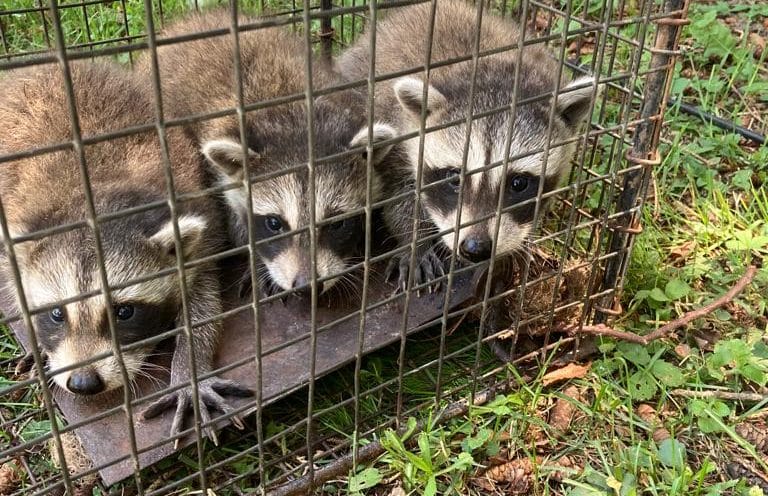
Ontario raccoon removal experts
Raccoon removal in Ontario, done humanely:
- Raccoon removal from attics and chimneys
- Raccoon removal from under decks, sheds, and porches
- Humane trapping and on-site release where appropriate
- Attic clean-up and restoration after removal
- Mother-and-kit safe family relocation in spring
Why choose The Critter Guy for raccoon removal?
We focus on getting the job done without overcomplicating it: fair pricing, honest work, and workmanship we stand behind. We’ve done countless jobs across Owen Sound, Bayfield, and the surrounding counties.
- Family-owned small business — Dave and Roman on every job
- 18+ years of raccoon removal experience in Ontario
- Mother-and-kit safe — we never separate denning families
Contact us for a raccoon quote
About Ontario raccoons
Raccoons are sleek, agile, and clever. If you hear sounds coming from your roof or attic at night, it could very well be raccoons. They’re omnivores — fruits, nuts, garbage, small animals, plants — they’ll eat just about anything they find. In urban and suburban settings, garbage and pet food are the most common attractants.
It’s important to know the breeding cycle, because that’s when things get most complicated:
- Raccoons mate in February and March.
- Pregnancies last about 63 days.
- Most kits are born April through May, with a smaller second window in summer.
- A typical litter is 2–5 kits.
If you’re hearing scratching and noise from March through June, there’s a strong chance you have a mother with kits — and that means we’ll plan the exclusion around the family.
Raccoon health concerns
- Baylisascaris (raccoon roundworm): transmitted through raccoon feces. It’s rare in humans but serious when it happens, especially in small children. Don’t handle raccoon latrines yourself — call us, or contact your local public health unit.
- Canine roundworm: can infect dogs that come in contact with raccoon feces.
- Ticks, fleas, and lice: common parasites carried by wild raccoons.
- Rabies: raccoons are a primary rabies vector in Ontario. If a raccoon is acting strangely (out during the day, disoriented, unusually aggressive or unafraid), keep your distance and call us or animal control.
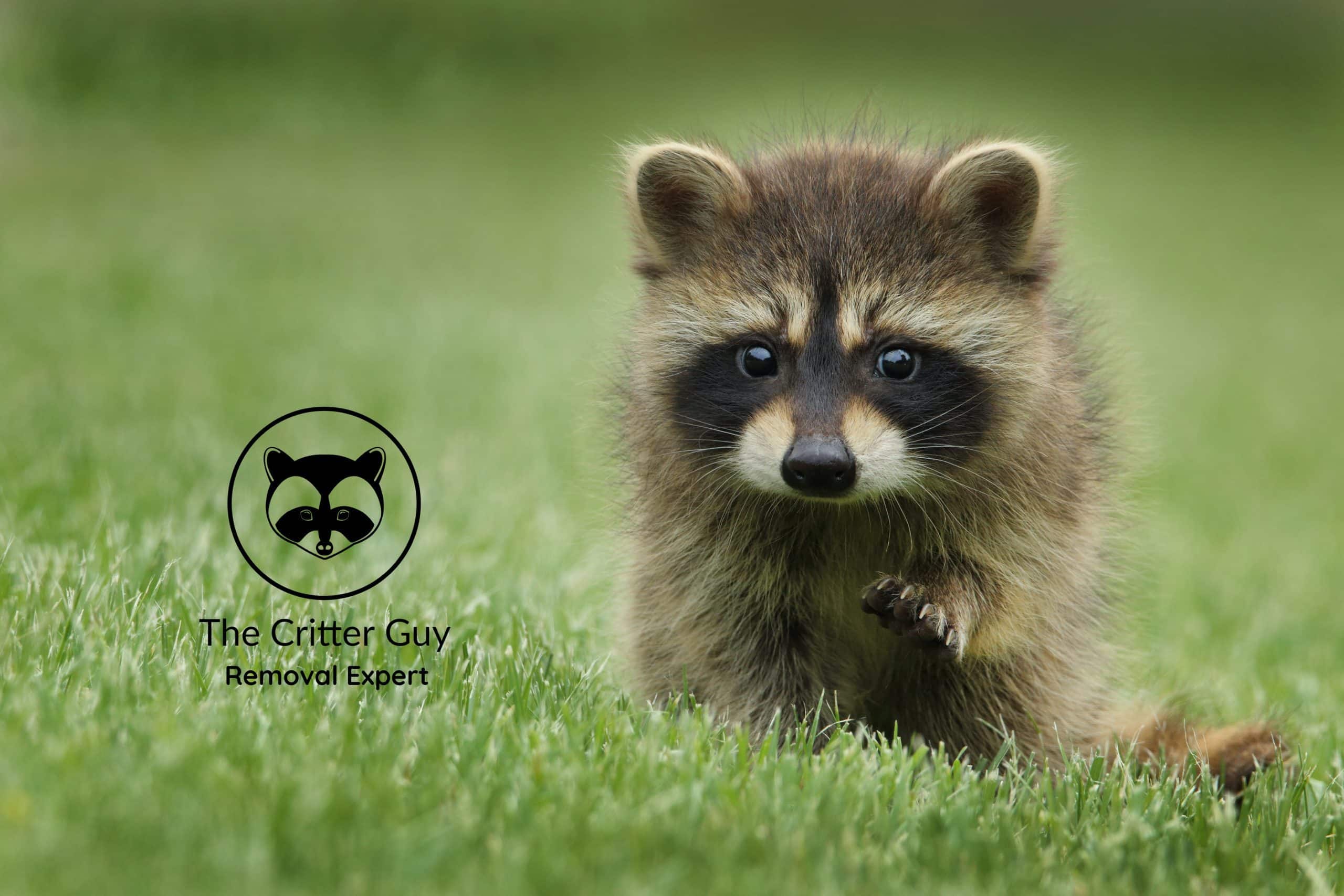
How to prevent raccoons from getting into your home
The best way to keep raccoons out is to close every gap before they find one. Inspect any open vents or chimneys for signs they’ve been around (such as tracks), cap them if necessary, and check for damaged roof flashing or soffit gaps. Heavy-gauge wire mesh is the standard fix — installed correctly, it lasts and doesn’t cause structural damage. Raccoons can squeeze under a deck through surprisingly small openings, so check those structures regularly too.
A few specific tips:
- Confirm the den is empty before sealing. If kits are inside and you seal the entry, the mother either chews her way back through (causing more damage) or the kits die in the wall — neither outcome is acceptable. We always confirm before we seal.
- Cap your chimney. Use a commercial chimney cap with heavy-gauge wire and a stainless steel frame. The lightweight clip-on caps don’t last.
- Inspect soffit and fascia annually. Most attic intrusions start at a soffit or fascia gap that’s been weather-stressed for a few years.
- Trim tree branches back from the roof. Raccoons climb branches, gutters, and even TV towers. Cutting back overhanging branches makes the roof harder to access.
- Wrap vulnerable corners. A 1m × 1m square of heavy-gauge mesh around a vulnerable corner makes climbing much harder.
- Cover all ventilation holes with rust-proof, heavy-duty screening — including ridge vents, gable vents, and dryer/bathroom exhausts.
Raccoons in the attic?
The attic is a perfect raccoon habitat — warm, dry, dark, and undisturbed. You may not hear them during the day, but you’ll know they’re there once the night activity starts. Raccoon families damage insulation, wiring, and structural materials. Once they’re in, trapping and one-way exclusion are the only reliable removal methods.
Raccoons in the garbage?
Unsecured garbage is an open invitation. Raccoons have learned how to defeat most consumer “raccoon-proof” bins. Securing the can (a heavy lid with a bungee strap or a locking mechanism, plus a tie-down to a fixed point) is the cheapest fix. If they keep coming back, trapping may be necessary — but solving the garbage problem usually solves the visitor problem.
Raccoons under the deck?
Decks are extremely common den sites — quiet, dark, and protected. In spring, a deck den is a prime spot for a mother raising kits. Mothers are very protective and can become aggressive if their kits are approached. Please keep your distance and let us handle the exclusion.
How we remove your raccoon problem
1. Inspect for entry points and signs
The first job is finding every place the raccoons are getting in. Telltale signs include raccoon droppings (often in latrines in the attic or yard), noises from the attic at night, shredded insulation, and tracks around the foundation, soffit, or roof edge. We walk the property, find the primary access, and note every secondary point that needs sealing.
2. Check for kits
Raccoon kits are typically born April through May and aren’t mobile for 8–10 weeks. If we find kits, the exclusion plan changes: we wait until they can travel with the mother, or we do a hands-on family relocation together. We never seal a mother out while her kits are still inside.
3. Humane removal and exclusion
Depending on the situation, removal looks one of two ways:
- One-way exclusion at the active entry point, so the raccoon family can leave but can’t return. This works best for older kits or for raccoons denning under structures.
- Hands-on trapping and family relocation, where the situation calls for it — mother and kits relocated together to a suitable habitat away from the property.
We use size-appropriate traps. Once trapped, raccoons are relocated humanely. We never use bait that could attract non-target animals.
4. Clean up and seal
Once the family has left, we remove the exclusion devices, seal every entry point with heavy-gauge mesh and chew-resistant materials, and clean up any latrine sites, shredded insulation, or structural debris. Big jobs sometimes require insulation removal and replacement; that gets quoted up front.
Signs you have raccoons
- Droppings inside the attic or near the roof edge
- Noises in the attic — scratches, thumps, kit chittering, footsteps
- Tracks on siding, decking, or around foundation vents
- Holes in soffits and foundation vents
- Loose siding, displaced soffit panels, or damaged fascia
- A garbage can that keeps getting knocked over and rifled through
Ontario raccoon removal — service area
Cities with dedicated raccoon removal pages:
Other communities we serve for raccoon removal:
Bayfield · Kitchener · Goderich · Kincardine · Grand Bend · Listowel · Sauble Beach · Wasaga Beach · Collingwood · Walkerton · Wiarton · Meaford · Southampton · Port Elgin · Markdale · Hanover
Ready for an inspection?
Request a raccoon quote or call 519-783-1575. Family-owned, with workmanship we stand behind.
Kind words from raccoon-removal customers
“We used Dave for bat removal in the past, and he was able to set up some exclusions and fix the problems. This time we had a raccoon mom and babies. Dave was back and quick as ever — got the problem fixed by trapping the raccoons humanely and proofing the house. Very happy with the results!” — Lisa Watson
“We had a raccoon in the backyard that was being very aggressive and scaring my family. We were worried about rabies, so we called The Critter Guy. Roman came out and was so nice — he set up a trap and caught the mother AND her baby. He explained that the mother was being very protective and that they’d be released in a conservation area. Excellent service and highly recommended for any raccoon job.” — Emma Bucksley